Monday, September 10, 2018

Sunday, April 22, 2018
A Photographer Explores the Evolution of Geometric Compositions in Vienna’s Architecture
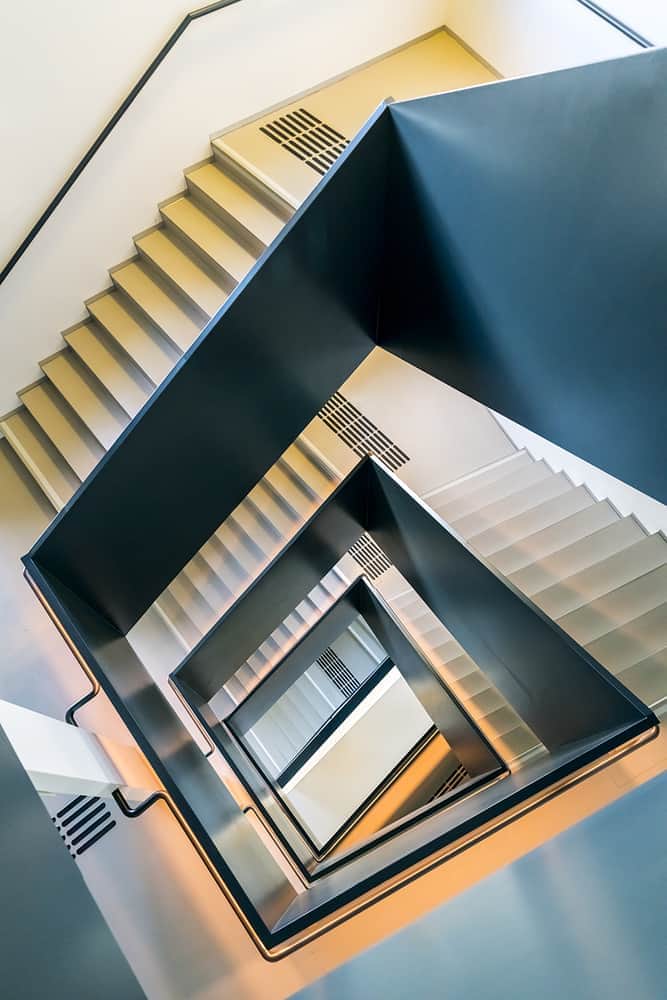
In his latest photograph collection, “Viennametry,” Hungarian photographer Zsolt Hlinka catches the unexplored voids at Vienna‘s patchwork of a historical and contemporary structure. After studying the symmetrical corner buildings of grandiose Budapest, Hlinka has proceeded north to Austria on his own search to find geometry and symmetry in the urban landscape.

Unlike Hlinkas past projects, “Viennametry,” follows the growth of architecture inside the city. By placing the modern against its conventional counterpart, the similarities or obvious differences display the development of Vienna‘s architecture over the eras. “These kinds are manufactured by building on their own predecessors, respecting or even breaking traditions, which means they cannot be separated from each other,” he explains.
Read more: Website / Behance / Instagram / Facebook




The post A Photographer Explores the Evolution of Geometric Compositions in Vienna’s Architecture appeared first on FREEYORK.
Tuesday, March 6, 2018
Self-Sustaining Yin & Yang House Let’s Owners to Grow Food on Its Terraced Roof
Architecture studio Penda has released visualizations of a house developed for a very small plot close to the German city of Kassel that show just how its owners will have the ability to develop food on both sides of its terraced roof.
The studio based on architects Chris Precht and Dayong Sun designed Yin & Yang house for a young family that wants to live and works in the countryside.

The customers also wish to reside off-grid and are targeting a self-sufficient lifestyle, meaning they plan to produce most of their food in the home.

The compact nature of the website meant that the only space available to grow vegetables, fruit, and vegetables is the roof. Penda so designed the roof as a series of terraces incorporating planters which will make a usable garden occupying the majority of the building‘s footprint.

“Whenever architects were designing a building, they take away an area that used to belong to nature,” said the studio, which includes offices in Beijing in China, as well as from the countryside near Salzburg in Austria.
“We strive to give this distance back to plants on the roof. At the same time, we provide a gardening program for those owners together with greenhouses in winter and rows of planters for the rest of the year.”

The building‘s form contains two interlocking segments that specify the living areas along with a dedicated workspace. The shape is based on the logo for yin yang — a Chinese philosophy that clarifies how apparently opposing forces can combine to make a balanced and stronger whole.

The unusual roof shape features stepped levels that descend in the middle of the house, evoking the way mountains rise on both sides of a valley.
Straight walls enclose the roof garden on either side while curving surfaces sweep down from the opposing corners towards the middle of the construction.

The sloping roof will channel rainwater towards a tank, in which it could be saved and used to water the crops. Through the entire year, the plants on the roof will vary with the seasons, shifting the building‘s appearance and improving its connection with nature.

The house will incorporate a covered car-parking distance where an entry at the center of the construction leads into a circulation area providing access to the various living and working spaces.

A double-height office located at the front of the house comes with a staircase ascending into a mezzanine that may be used as a second workspace or a model-building workshop.

The open dining and kitchen room is positioned in the opposite corner of the office, beside the master bedroom. This double-height area is going to be lined with big windows looking onto the encompassing character.
Steps constructed into the timber joinery will provide access to the rooftop garden through entry doors set to a dormer. The dormer’s roof will accommodate a decked terrace overlooking the backyard.

Penda co-founder Chris Precht said the job is informed by his lifestyle in the hills of Austria, from where he can handle a worldwide studio when enjoying the benefits of rural living. Structure of Yin & Yang house is scheduled to begin in mid-2018.

The studio‘s past projects have included a modular construction system which can be used to create customizable plug-in micro homes, and also a proposal for that a timber-framed high rise in Toronto featuring platforms for developing trees and plants.
The post Self-Sustaining Yin & Yang House Let’s Owners to Grow Food on Its Terraced Roof appeared first on FREEYORK.