Showing posts with label August 02. Show all posts

Thursday, August 2, 2018

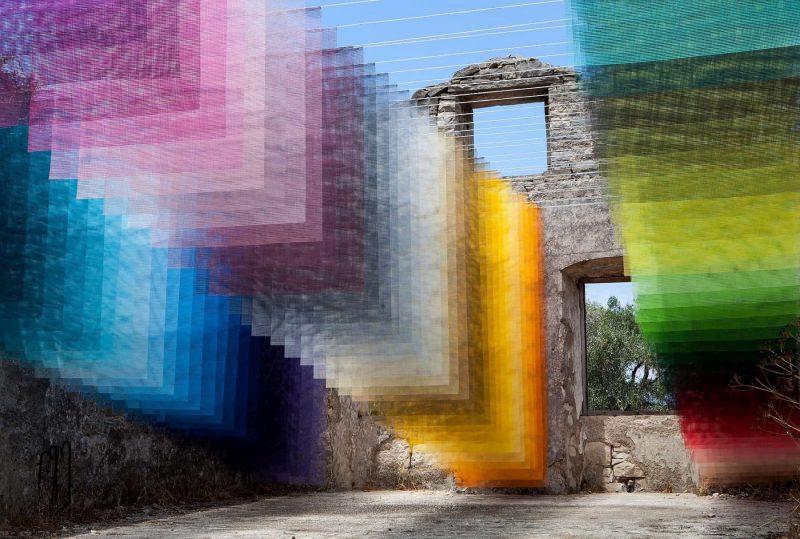
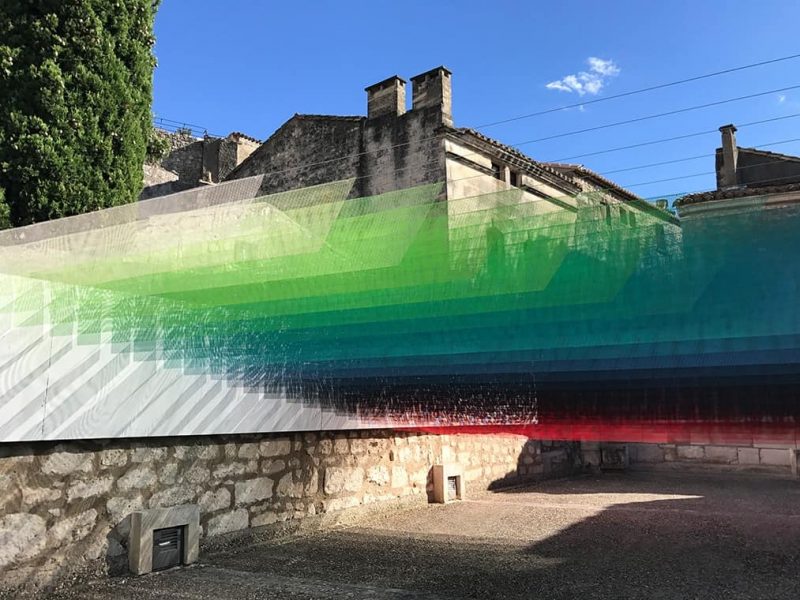
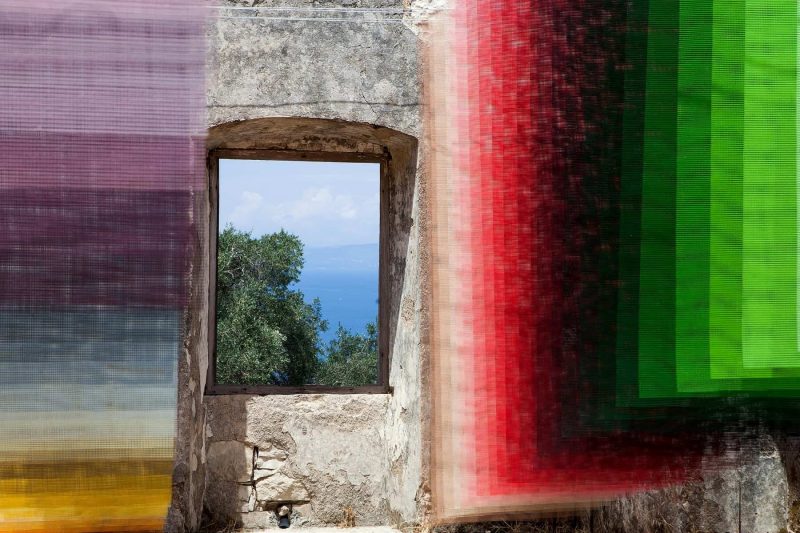
An Artistic Duo Suspends ‘Digital Pixels’ in Ancient Greek Ruins

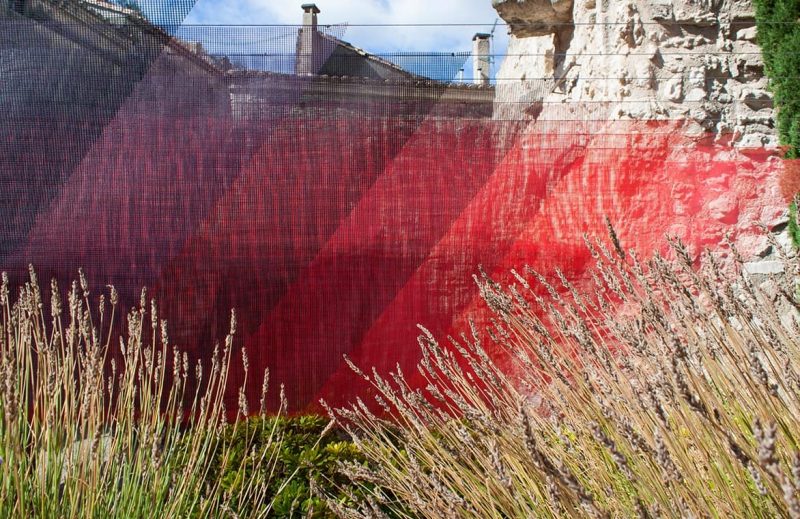
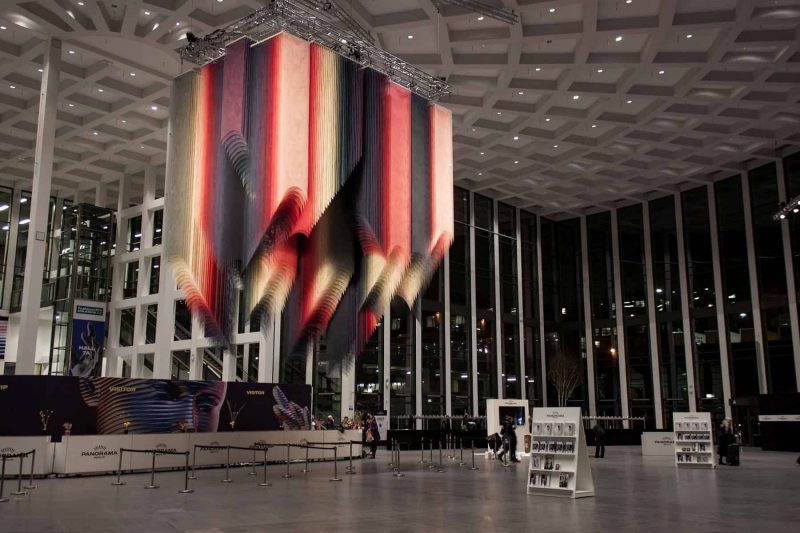
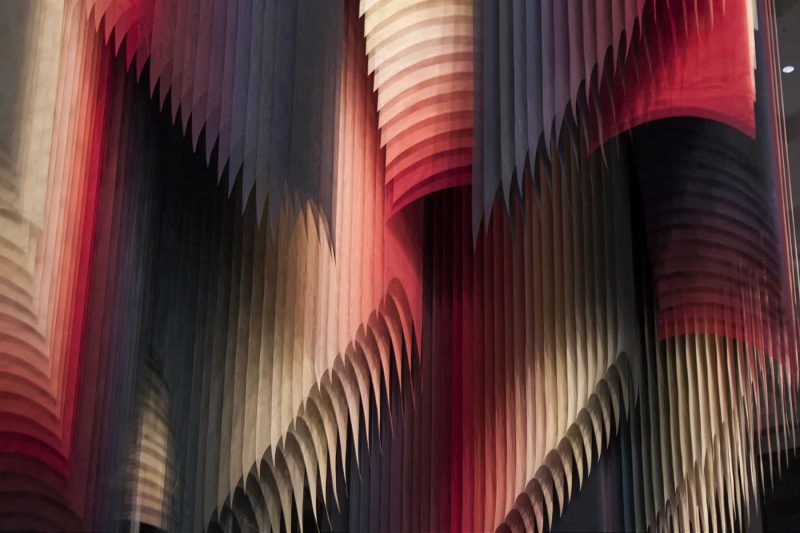
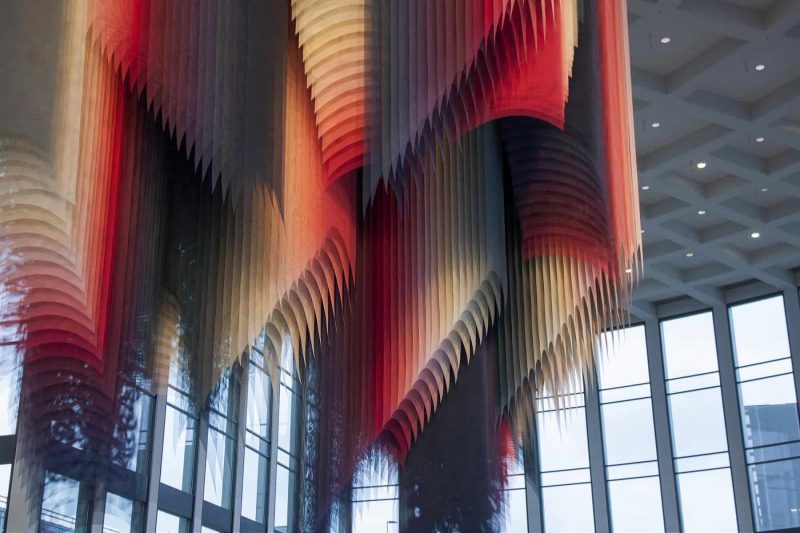
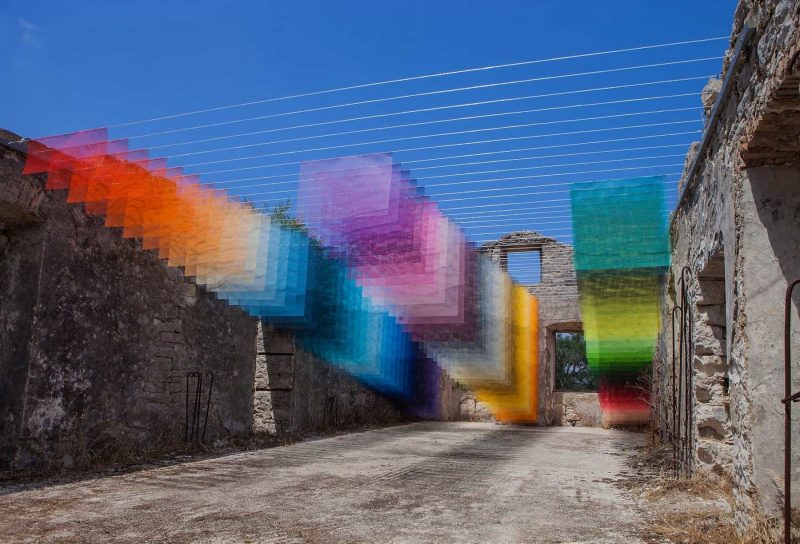
Hanover and Berlin-based artists Thomas Granseuer and Tomislav Topic called Quintessenz, create site-specific installation art made from a mix of substances. For their most recent endeavor, the duo changed a derelict stone construction on the Greek island of Paxos within their Paxos Contemporary Art Project. The 400-year-old ruin was filled with layers of colorful spray-painted fabric, creating an abstract spectrum of rainbow hues.

This latest piece references some of Quintessenz’s previous works, such as the Paradis Perdus (2017) installation in Les Baux-de-Provence, France, in addition to Flickering Lights (2018), made for Panorama Fashion Week in Berlin. For each installation, the creative duo cut bits of this colored, mesh-like cloth into geometric shapes and suspended them into grids and rows. When seen collectively, the fabric appears to blur and merge into soft gradients that seem like digital pixels, contrasted against the older, grey stone buildings. The floating fabric changes based on the viewer’s motion and the location’s natural components, challenging the viewer’s perception of the distance.

Although Quintessenz’s installations look incredible when caught on camera, the duo’s unique functions are always best viewed in person. The artists explain,”We expect that the visitors will leave their mobile phone cameras in their pockets for a moment and simply enjoy the light and the translation of the wind in the material.”

You can see the Paxos Contemporary Art Project before September 9, 2018, and watch more of Quintessenz’s installments on their website and Instagram.
 

The post An Artistic Duo Suspends ‘Digital Pixels’ in Ancient Greek Ruins appeared first on FREEYORK.

A Street Artist Creates Anomorphic Murals That Look Real

Portuguese artist Sergio Odeith has mastered the technique of painting murals that employ perspective tricks, which fool the viewer into perceiving the two-dimensional paintings as solid objects when viewed from certain angles.

Though mostly known for his trompe l’oeil decoration, Portuguese road artist Odeith has lately been adding larger-than-life insects to his or her repertoire. A number of the wall-based works are placed in corners and need careful planning to achieve an anamorphic effect. You may view more of his works on Instagram.

H/T thisiscolossal

The post A Street Artist Creates Anomorphic Murals That Look Real appeared first on FREEYORK.

Wednesday, August 1, 2018

Designer Oskar Zieta’ Daliowa Island Pavilion in Wrocław

Polish designer Oskar Zieta has created a public sculpture in Wrocław using an inflated steel technique he plans to use for larger works of architecture.

Zieta calls this technique FiDU, or freie innen druck umformung in German, which roughly translates to internal pressure forming. It is a process he developed while studying in ETH Zurich in the early 2000s and has continued to evolve.

“It is by far the most elastic tool-less metal forming technique ever,” Zieta told Dezeen. “It allows us to create innovative, customized bionic shapes and fully recyclable objects using quite efficient mass-production processes and individualized changing methods.”

Zieta used the approach to create his Plopp stool for Danish manufacturer Hay in 2008. Ever since then, his ambitions for FiDU have grown.

“Durability tests conducted on the Plopp stool gave surprising results,” he said. “A stool is weighing just a couple of kilograms can endure a load of 2.6 tons. This is the burden of a full-grown two or 2 little cars. This compels us to create things which are not just beautiful but also technologically exceptional.”

That drive caused Nawa, which stands 7.5 meters tall, and Wir, a 24-meter-high sculpture that fills the atrium of a shopping center. Now, Zieta is researching the architectural potential of this technique.

“Such structures can be used as bearing components and construction components, merging beauty and functionality,” explained Zieta.

“Currently we are intensely working on implementing FiDU in design as facade elements, and in the sector as ultralight structures. Additionally in mining as volumetrically expanded steel profiles.”


Nawa was built in Daliowa in 2017 as a member of an initiative to revitalize the island, where visitor numbers have been in decline. It will stay there as a permanent installation.

Its polished steel surface reflects its environment, altering the sculpture‘s appearance through the afternoon, while the arched shape is intended to seem organic like it could have”grown right from the ground”.

A parametric design procedures led to Nawa’s closing shape — Zieta compacted parameters concerning the desirable size and shape into software, which determined that the best form of this item.


Nawa has now been set up for a year, and Zieta said it’s been embraced by the residents of Wrocław.

“At first, many people were cautious,” he said. “New jobs often provoke mistrust, but shortly after the opening the island has become living.”

“Families, groups of friends, people seeking rest using a publication started to come there, and at the evenings’ couples began to appear on intimate walks,” he continued.

“Today, a lot of people can’t imagine this place without Nawa, which has become a part of the surroundings and also a point on the map of many tourists from the country and the whole world.”

H/T dezeen

The post Designer Oskar Zieta’ Daliowa Island Pavilion in Wrocław appeared first on FREEYORK.