Showing posts with label structure. Show all posts

Wednesday, August 1, 2018

Designer Oskar Zieta’ Daliowa Island Pavilion in Wrocław

Polish designer Oskar Zieta has created a public sculpture in Wrocław using an inflated steel technique he plans to use for larger works of architecture.

Zieta calls this technique FiDU, or freie innen druck umformung in German, which roughly translates to internal pressure forming. It is a process he developed while studying in ETH Zurich in the early 2000s and has continued to evolve.

“It is by far the most elastic tool-less metal forming technique ever,” Zieta told Dezeen. “It allows us to create innovative, customized bionic shapes and fully recyclable objects using quite efficient mass-production processes and individualized changing methods.”

Zieta used the approach to create his Plopp stool for Danish manufacturer Hay in 2008. Ever since then, his ambitions for FiDU have grown.

“Durability tests conducted on the Plopp stool gave surprising results,” he said. “A stool is weighing just a couple of kilograms can endure a load of 2.6 tons. This is the burden of a full-grown two or 2 little cars. This compels us to create things which are not just beautiful but also technologically exceptional.”

That drive caused Nawa, which stands 7.5 meters tall, and Wir, a 24-meter-high sculpture that fills the atrium of a shopping center. Now, Zieta is researching the architectural potential of this technique.

“Such structures can be used as bearing components and construction components, merging beauty and functionality,” explained Zieta.

“Currently we are intensely working on implementing FiDU in design as facade elements, and in the sector as ultralight structures. Additionally in mining as volumetrically expanded steel profiles.”


Nawa was built in Daliowa in 2017 as a member of an initiative to revitalize the island, where visitor numbers have been in decline. It will stay there as a permanent installation.

Its polished steel surface reflects its environment, altering the sculpture‘s appearance through the afternoon, while the arched shape is intended to seem organic like it could have”grown right from the ground”.

A parametric design procedures led to Nawa’s closing shape — Zieta compacted parameters concerning the desirable size and shape into software, which determined that the best form of this item.


Nawa has now been set up for a year, and Zieta said it’s been embraced by the residents of Wrocław.

“At first, many people were cautious,” he said. “New jobs often provoke mistrust, but shortly after the opening the island has become living.”

“Families, groups of friends, people seeking rest using a publication started to come there, and at the evenings’ couples began to appear on intimate walks,” he continued.

“Today, a lot of people can’t imagine this place without Nawa, which has become a part of the surroundings and also a point on the map of many tourists from the country and the whole world.”

H/T dezeen

The post Designer Oskar Zieta’ Daliowa Island Pavilion in Wrocław appeared first on FREEYORK.

Tuesday, June 19, 2018

Visit Church of Hagia Sophia in Thessaloniki

The Agia Sophia, which is also known by the names Ayia Sofia or Hagia Sophia, is known for its beautiful architecture and rich history. Located in Thessaloniki, Greece, it is the biggest and most popular Byzantine church. It stands at the Ayia Sofia Sq. As of now, it is open every day for visitors – from 8 am in the morning to 9 pm at night although it is sometimes closed at around 1 to 5 pm. It is one of the sacred places for Holy Wisdom in Thessaloniki. You can reach it easily with any professional Thessaloniki airport transfer.

Agia Sophia – History & Background

The exact time of origin of this structure remains unclear, although most scholars believe that it is an early 8th-century structure – possibly erected when Leo III the Isaurian was on the throne (717 – 740 AD). Excavations in the site have revealed that the Church stands over a Roman edifice as well as an Early Christian basilica.


In 1585, after seven or eight hundred years as an Orthodox church, the structure was converted by the Turks into a mosque. It was rebuilt in 1907-10 after being damaged in 1890 in a fire. In 1912, it was reinstated as a Christian place of worship. In 1941, an air raid by the Italian forces destroyed the graceful Turkish portico. The Hagia Sophia also suffered damages in 1978 in an earthquake.

What Can You See at Agia Sophia?

Although renovations in the 20th-century have killed some of its primitive beauty and ambiance, this old site is still worth visiting due to its artistic and historical significance. Some of its original mosaics are still there. There is Jesus Christ on the dome, on a rainbow throne, angels surrounding the Virgin Mary and trees dividing the Apostles.

The mosaics on the apse have a Virgin Enthroned. There are monograms of the Empress Irene and Constantine VI. Some of the mosaics, which have managed to last despite the Iconoclastic era, represent liturgical texts, stars and crosses.

The interior is very large and consists of a dome with a 10 m diameter. It is perched on a square-shaped drum that, unusually, has rounded in place of circular corners. Its exterior does not look very fetching but is placed in a beautiful setting – a garden with pine and palm trees.

The eastern side appears as a standard Byzantine church while the west façade is square, flat and plain. The western wall arches still have remnants from frescoes dating back to the 11th century, and primarily comprise of bust-sized and full-length portraits of saints.

The Agia Sophia Square, which is located at the exterior and to the northwest of the church, is a square in Thessaloniki of the most historical significance. You must see this. On November 2, 1944, when Thessaloniki was freed from the Germans, a thanksgiving service was organized in this place.

When you are tired from the long walks in and around the church, you can walk to the Terkenlis and Byzantium pastry shop located nearby at 33 Agias Sophias to have some snacks for refreshment.

The post Visit Church of Hagia Sophia in Thessaloniki appeared first on FREEYORK.

Thursday, May 17, 2018

Daewha Kang Design Creates Floating Wooden Structure for an Art Exhibition

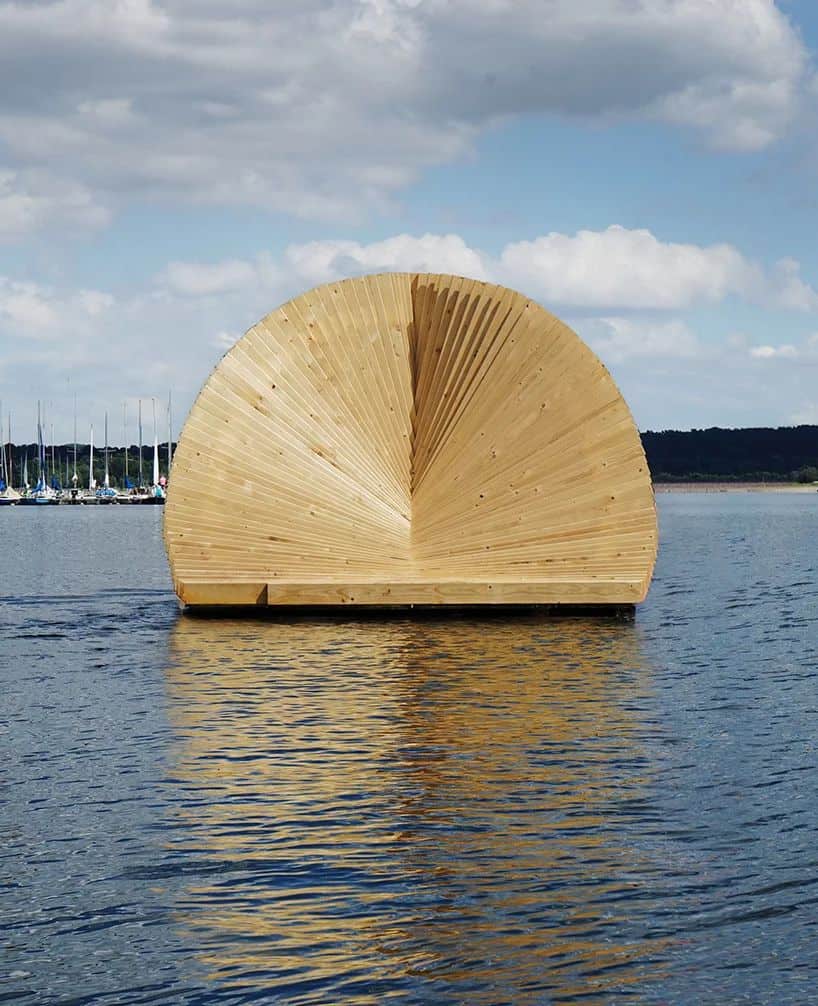
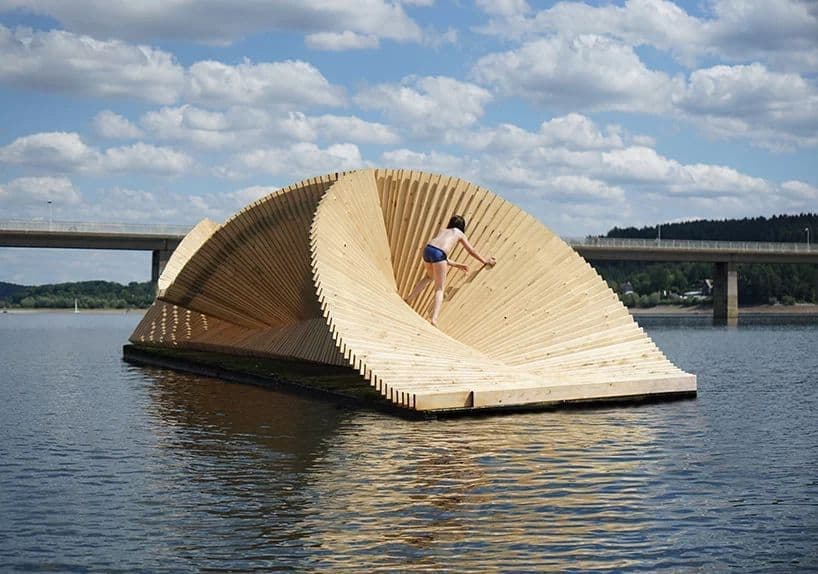
London-based studio Daewha Kang Design has set a floating pavilion as part of the art exhibition ‘Odyssey‘ on the Möhnesee lake, North Rhine-Westphalia, Germany, organized from the Kunstverein Arnsberg museum. The exhibition featured twenty-four artists who were requested to make bits on the lake, beneath the water, or even at the lakeside. Named ‘Circle‘ after the enchanting witch from Greek mythology, the pavilion provides a resting place for visitors as they float from art to art.

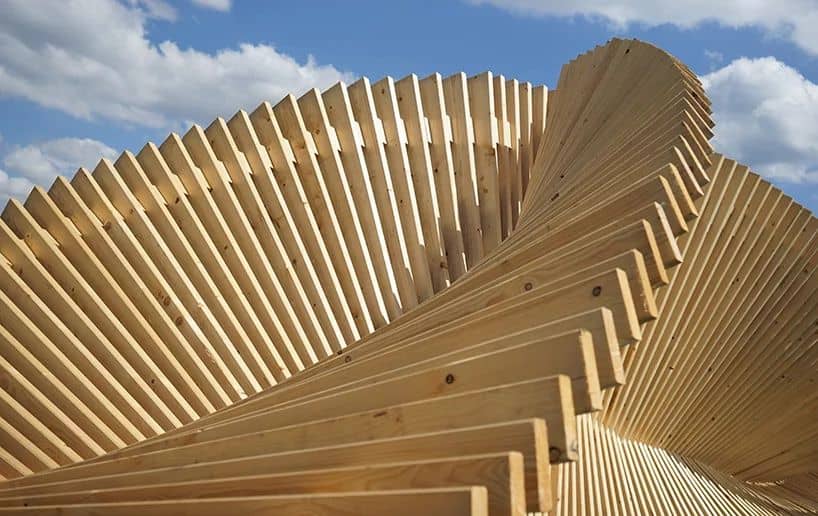
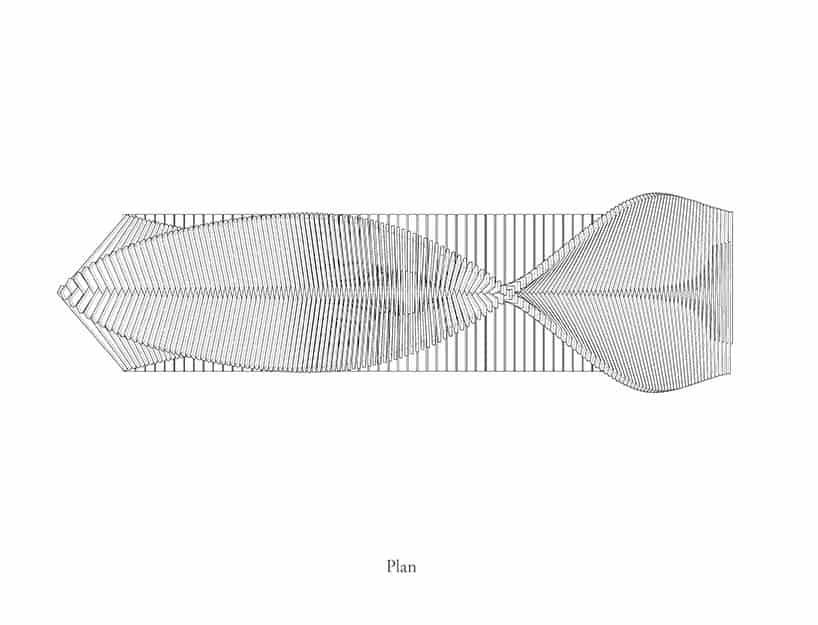
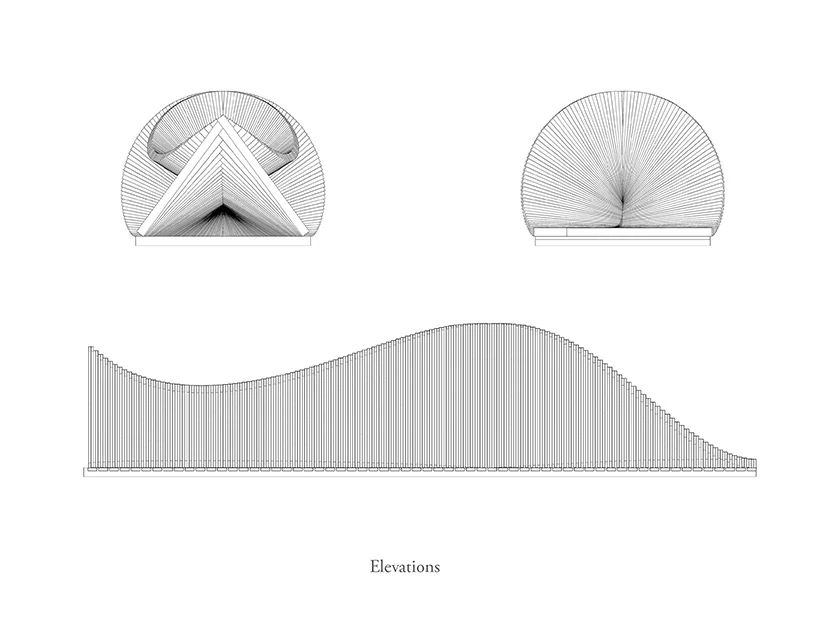
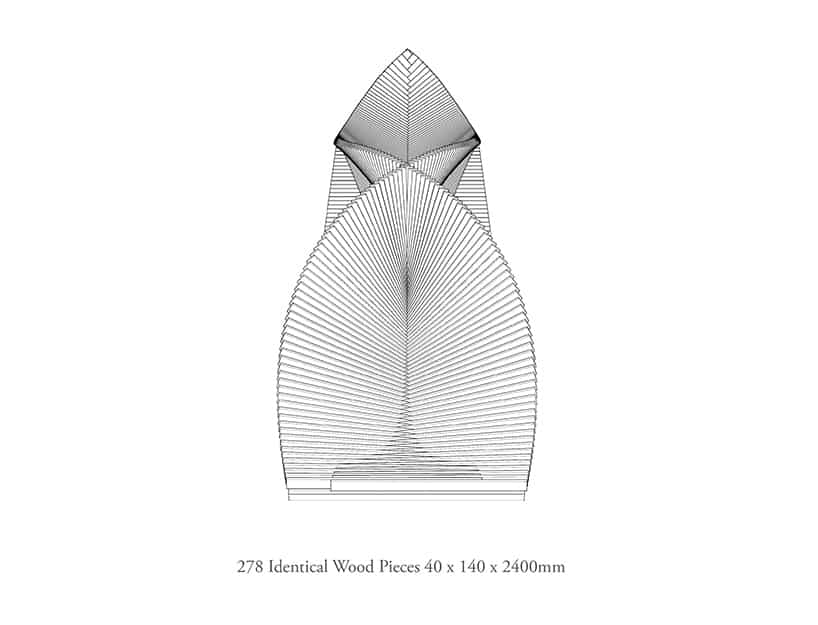
The theme of transformation takes shape throughout the motion of 278 equal pieces of spruce which turn and shift to create forms that are alternately natural and platonic. The expression in the water finishes the shapes, developing a diamond from 1 elevation a circle by the other, and something creature-like in between.

Daewha Kang’s simple structure method of shifting, rotating, and adjusting 8-foot standard Measure 2×4’s supposed that the construction could be constructed by local employees. The alternating rhythm produces a surprising assortment of qualities — by the look of a solid disc when seen directly on, to an ethereal and transparent screenwork from the side. The parametric design was fundamental to the conception and realization of circe, but ultimately the aim and the result was to create a sense of wonder, mystery, and delight.

h/t www.designboom

The post Daewha Kang Design Creates Floating Wooden Structure for an Art Exhibition appeared first on FREEYORK.