Countries such as Greece, Italy, Egypt, and Mexico are famous for some of the most interesting historical monuments on the planet. Sadly, not all of them have managed to survive the cruel wheel of time, and after so many centuries that the only thing left to remind us of them are their destroys. But have you ever tried to envision how those architectural wonders, like Parthenon in Athens, Mexico‘s Pyramid of the Sun, or Italy‘s Temple of Jupiter, looked in all their glory?
Expedia’s NeoMan job, created in collaboration with Maja Wrońska and Przemek Sobiecki from”This Is Render,” gives us a unique chance to travel back in time and research the original structures until they were ruined by centuries of organic decay. This creative team examined seven famous historical buildings in 3D animations, bringing us back hundreds of years, gradually showing how they had been built up to the magnificent structures that they were. Scroll down to observe that stunning historical engineering functions on your own.
The Parthenon (Greece)
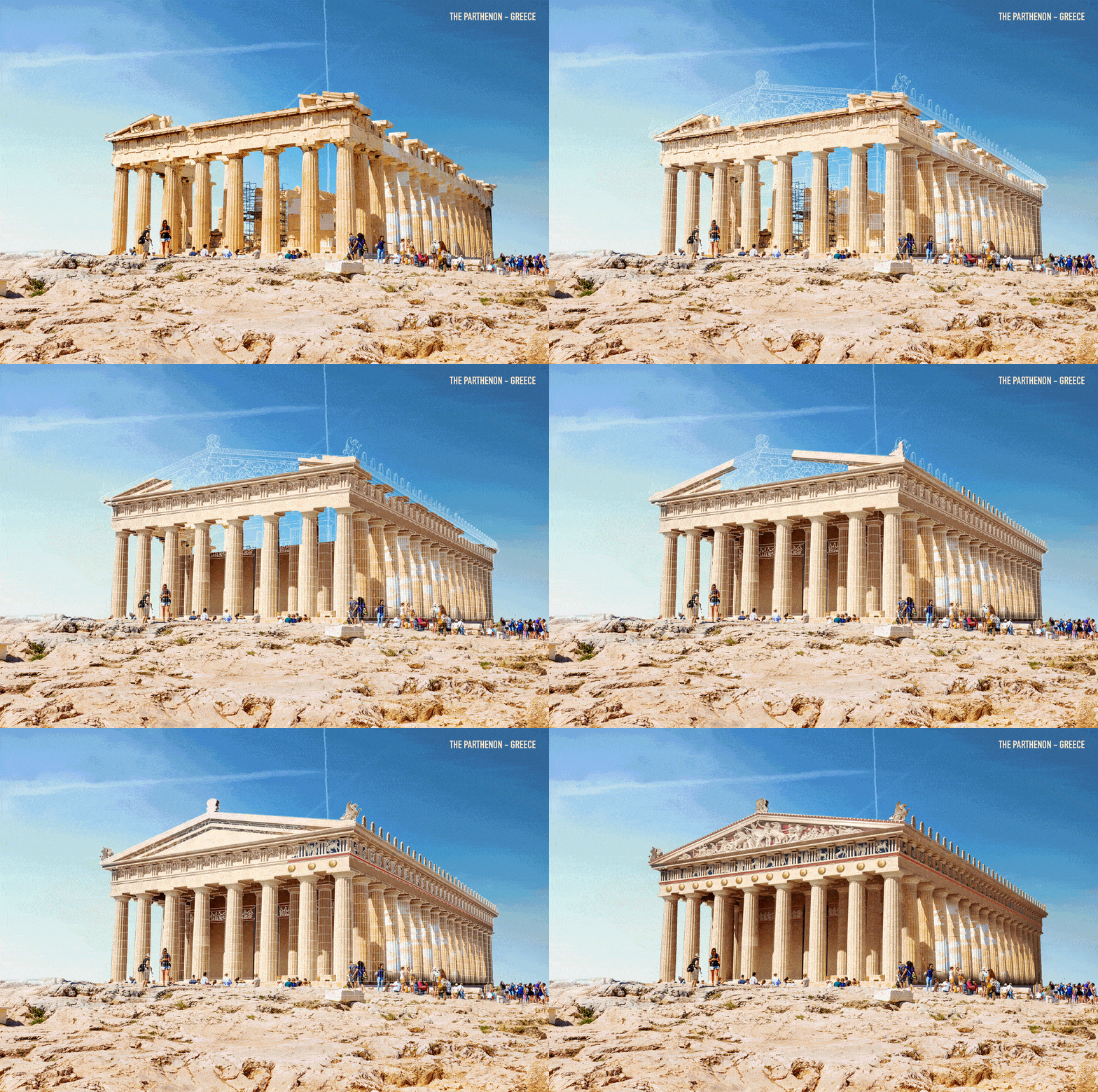
“Back in early times, this temple commissioned a monumental golden statue of Athena, the Greek goddess of knowledge, war, and craft. Sitting atop the mountain in the Acropolis, an ancient citadel in Athens, the Parthenon cuts an imposing silhouette. In 1687 it was seriously damaged in the Great Turkish War; however a lot of this sturdy Doric architecture withheld the burst, and a good chunk of it is still intact to this day. Nowadays it is a tourist destination bringing millions of visitors a year. This is, fully restored to its original glory. Athena herself would be pleased.”
Nohoch Mul Pyramid (Cobá) (Mexico)
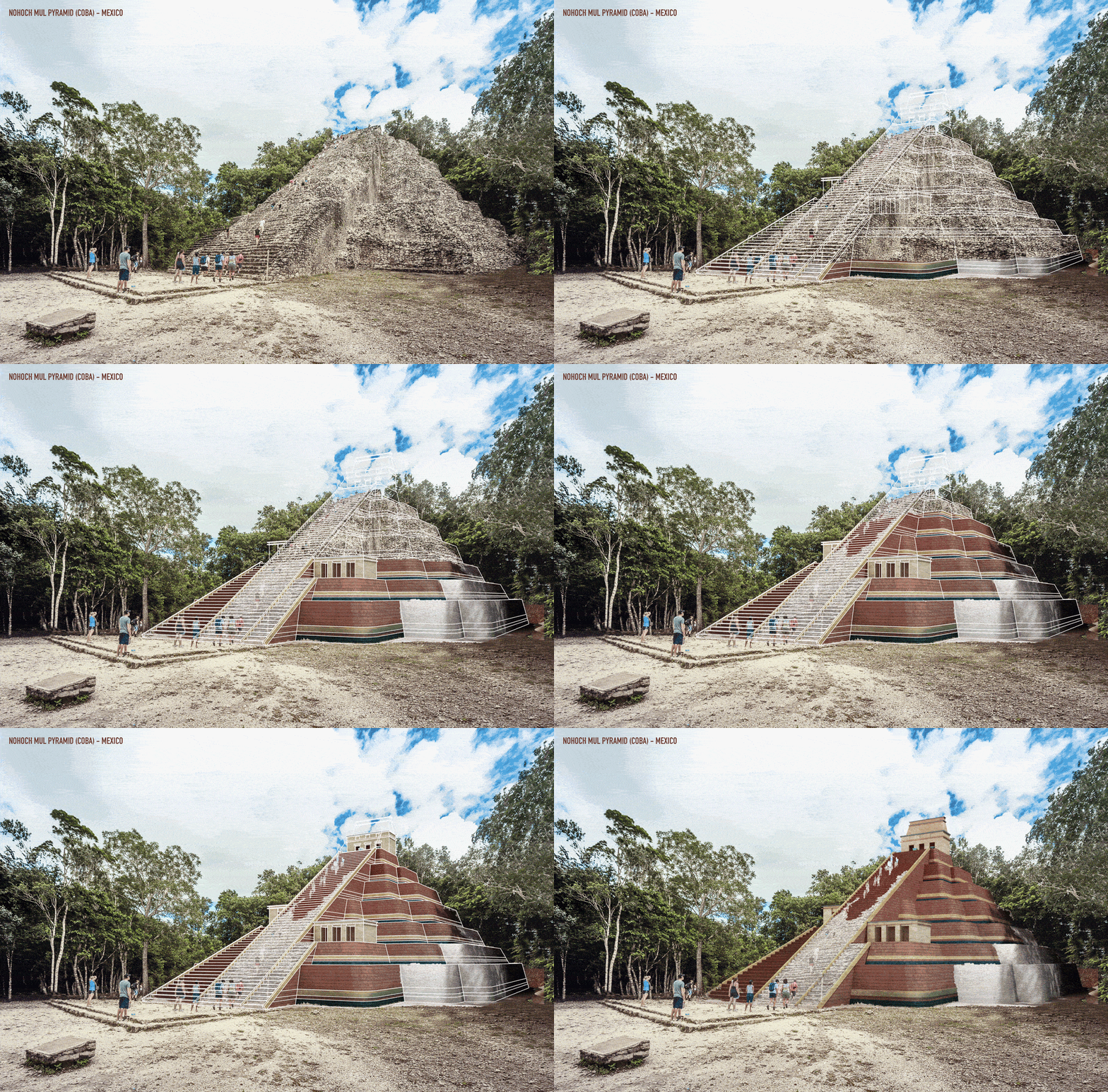
“Cobá is a Mayan remain in the Mexican state of Quintana Roo. The place is thought to have been first settled between 100 BC and 100 AD and left around 1550, upon the coming of the Spanish conquistadors. At 137 ft tall, Nohoch Mul is the tallest Mayan pyramid on the Yucatan Peninsula and the second highest Mayan pyramid in the world. It had been discovered in the 1800s, but the archaeological site was not opened to the public until 1973, since the thick jungle which surrounded it made it challenging to find. It’s off the hidden path, but today you can get there by public transportation or car.”
Area Sacra di Largo Argentina (Italy)
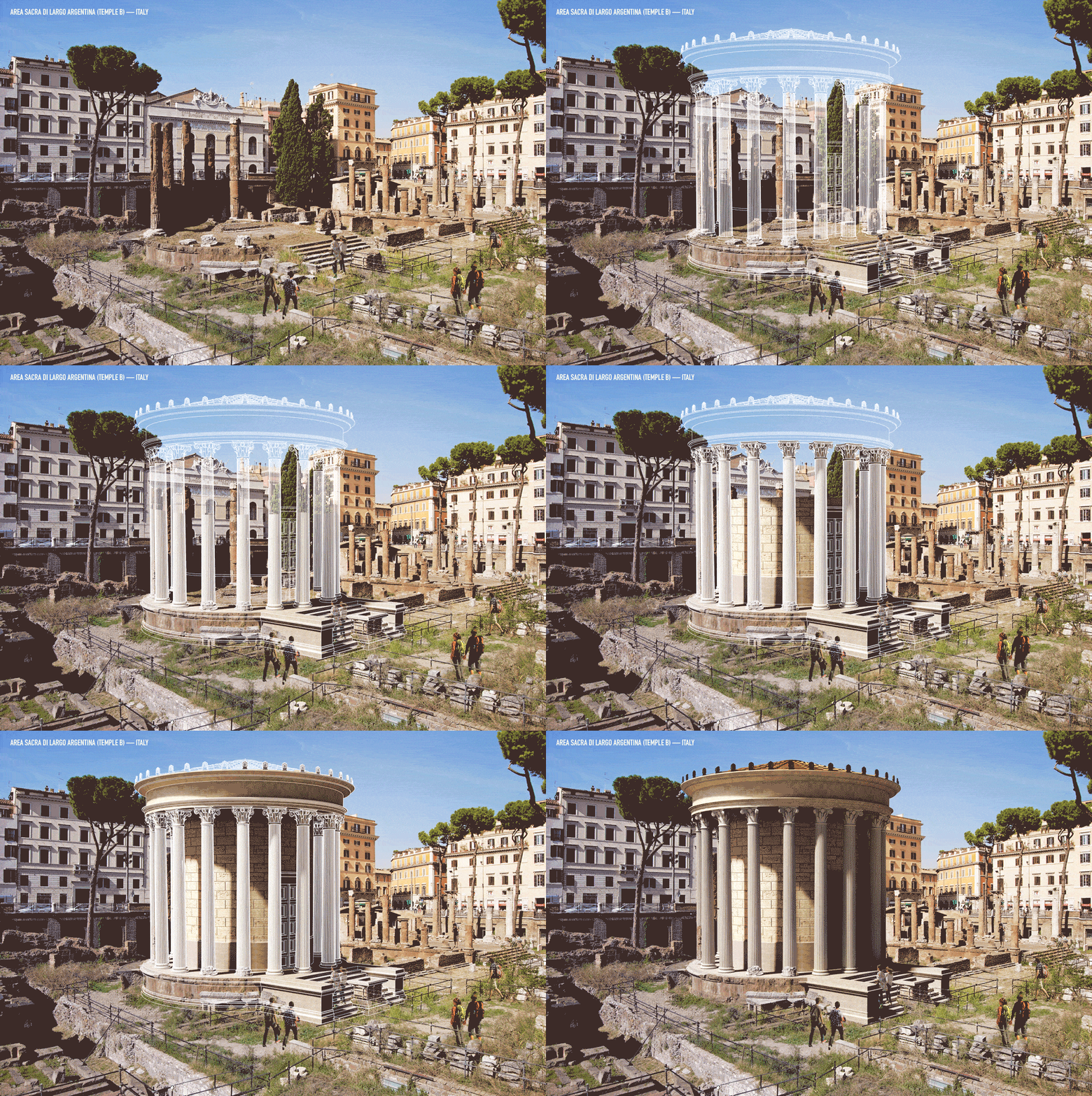
“This square in Rome homes not one, but four Roman temple ruins. It had been discovered during construction work from the 1920s. Temple B has become the most recent of the four temples, and six of its columns, the original steps and the alta are still intact. Visitors to the area will not just find a fascinating archaeological website, but also countless cats living among the ruins. Volunteers feed, clean and look after the cats and people are urged to say hello or even adopt them. Here’s what the temple would have looked like, minus the cats.”
The Pyramid of the Sun (Mexico)
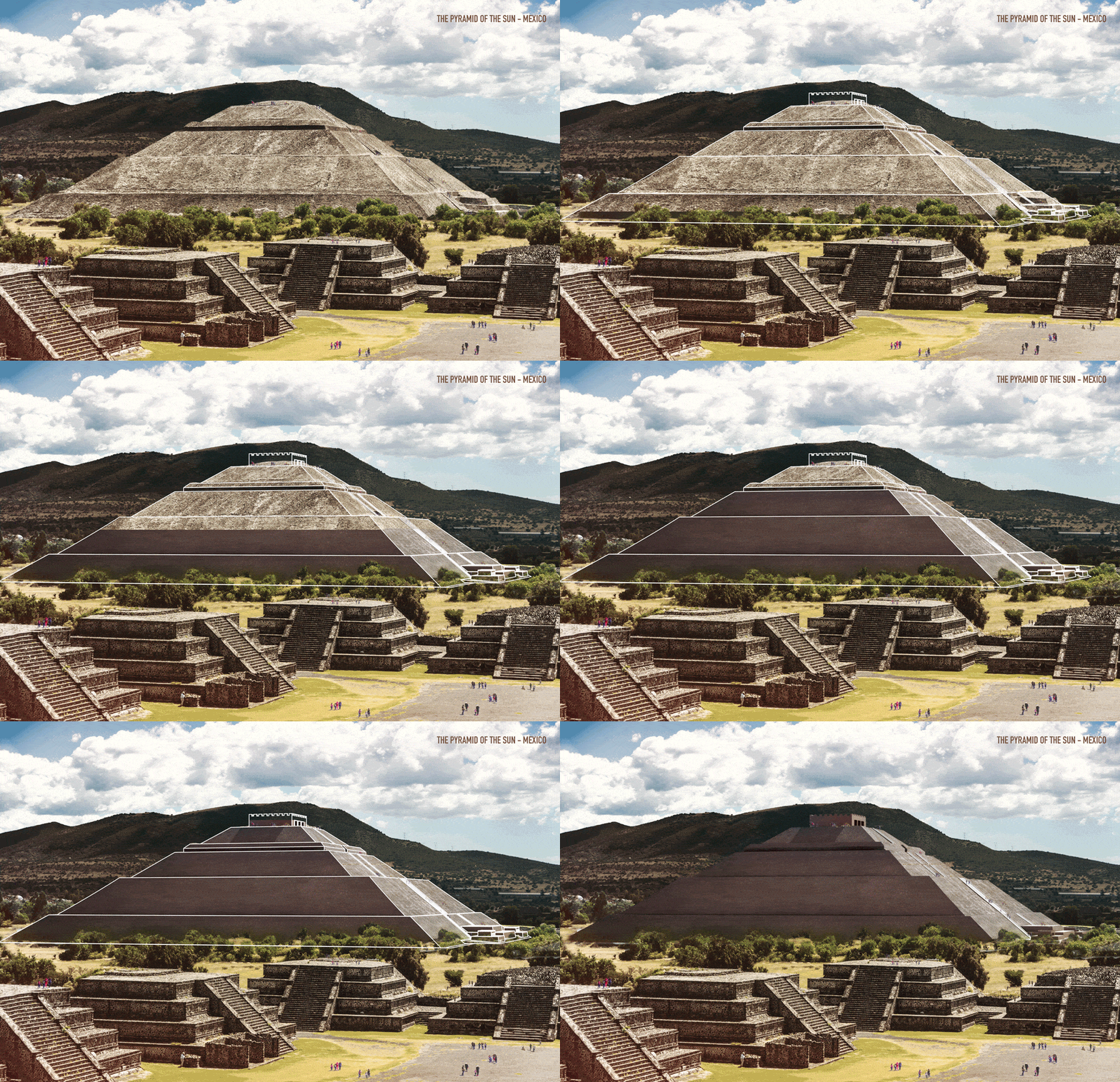
“Teotihuacán was among the earliest urban facilities in central Mexico and is presently one of the essential archeology sites in Mexico. It had been constructed between the 1st and 7th centuries CE, but we understand very little about people who built it. They constructed the first complex cities in the region and then mysteriously vanished. The Pyramid of the Sun is the greatest building in Teotihuacan and one of the earliest pyramids in central Mexico. It’s also among the largest, and as you can see from that reconstruction, it was a spectacular mountain of a structure.”
Temple of Jupiter (Italy)
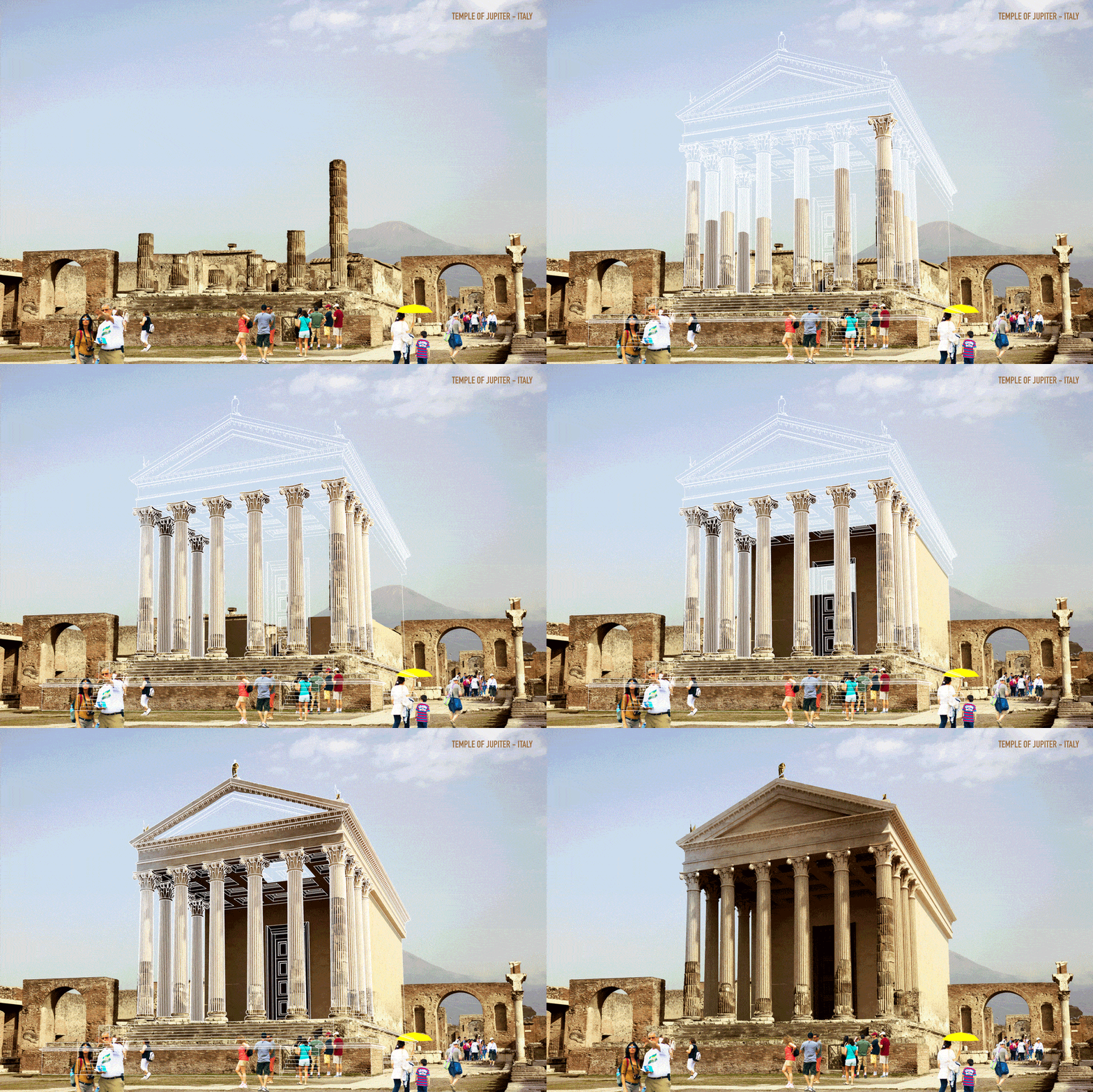 “Built-in commitment to Jupiter, the god of the sky and thunder, this temple has been the primary center of religious life in the ancient town of Pompeii, a tiny Roman city around the Bay of Naples. It stood imperative in the Forum, with Mount Vesuvius towering ominously supporting it. The volcano exploded in August of 79 AD, tragically erasing Pompeii from the surface of the planet. The place was discovered in the 16th century, and lots of years of excavation have given the millions of annual visitors an interesting insight into the everyday life of the 1st-century Roman city.”
Luxor Temple (Egypt)
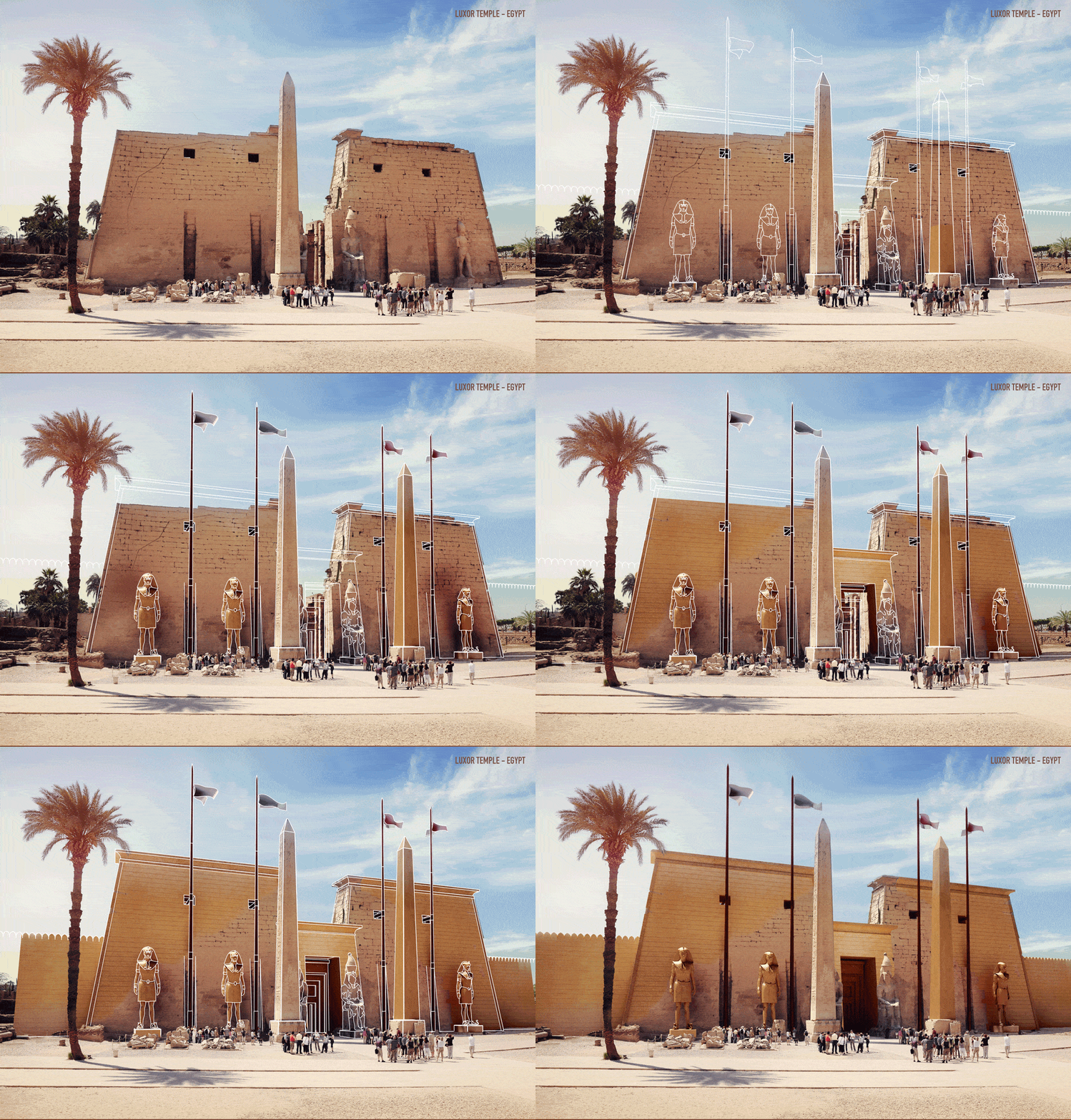
“Since its beginning, Luxor Temple, which takes its title from the Arabic word, al-Uksur (“fortification”), was a sacred site. Commissioned from Amenhotep III at 1380 BC, the temple has been renovated by Rameses II about a hundred decades later to incorporate a great pylon gateway and an open courtyard. It was joined to the neighboring Karnak Temple with an avenue of sphinxes, who guarded the temple gates. With huge obelisks and architraves, Luxor Temple represents a few of ancient Egypt‘s most monumental stone architecture. It is a testimony to the country’s history and a must-see on any Egyptian holiday.”
Milecastle 39 (part of Hadrian’s Wall) (England)
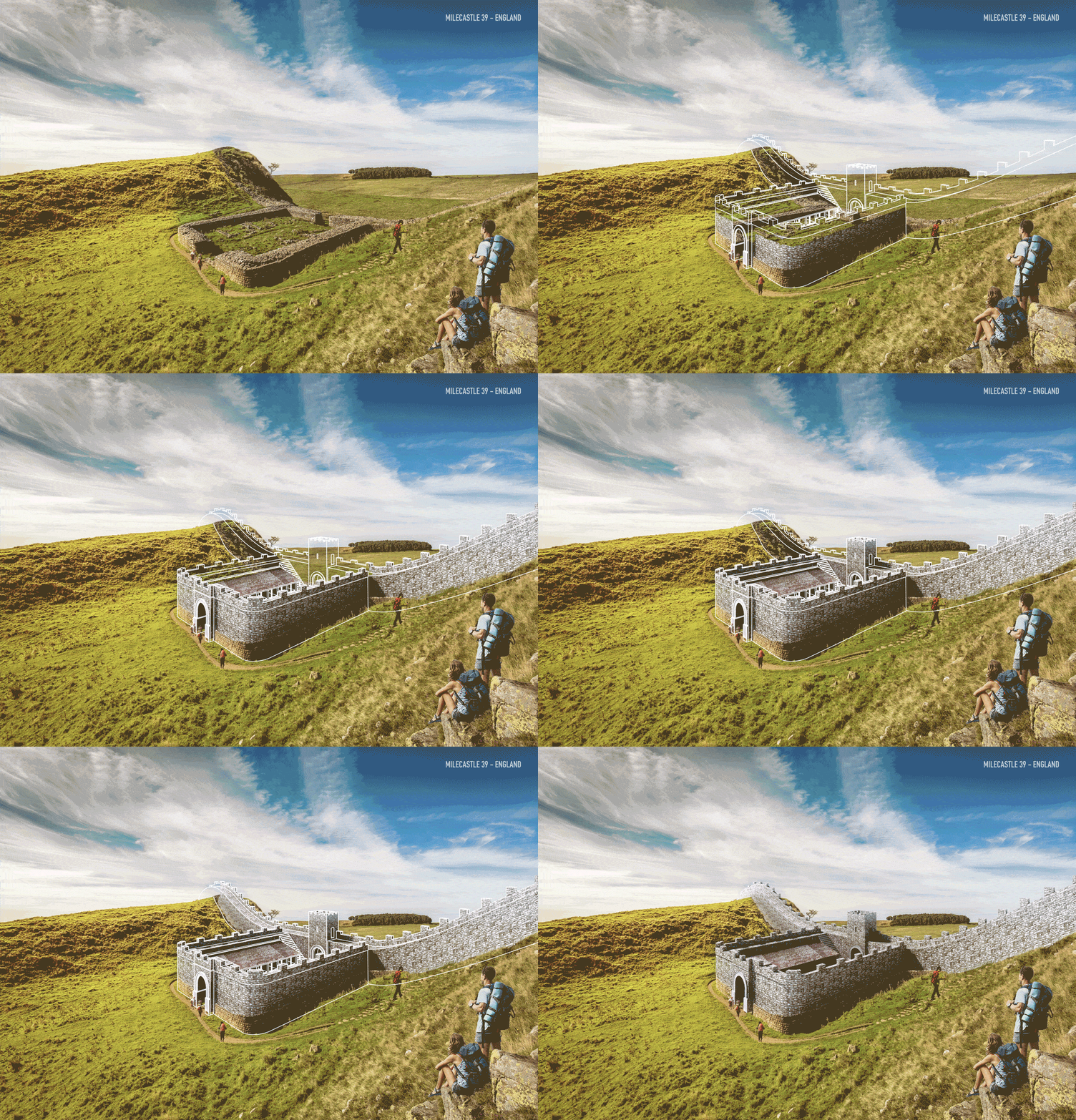 “Stretching 73 miles around some of the most exciting countrysides in England, Hadrian’s Wall dates back to the 1st century AD. Historians still dispute the reasons for the building of the wall. The most common theory is that on getting Roman Emperor in 117 AD, Hadrian had the wall established to make his empire more secure. To improve security, forts called mile castles were put along the wall at intervals of roughly one Roman mile.”
The post An Artistic Duo Restored 7 Famous Historical Buildings to Their Ancient Glory in GIFs appeared first on FREEYORK.